
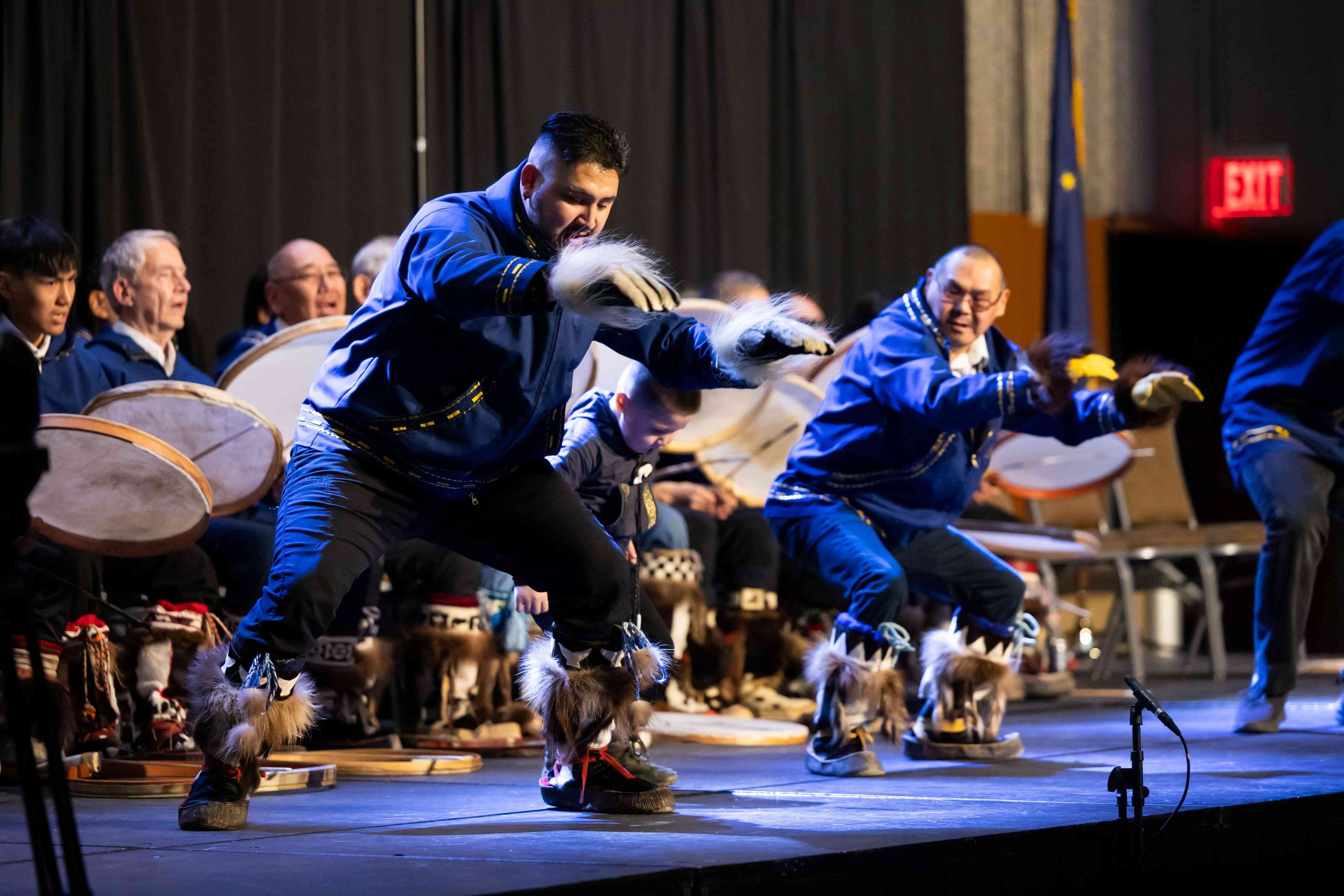
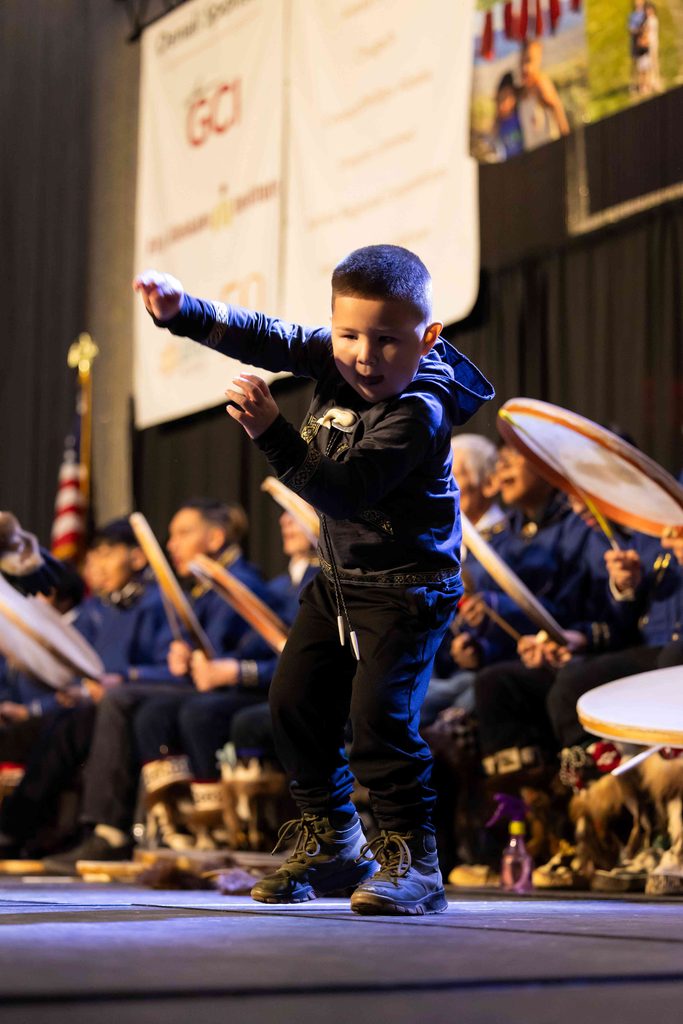
My favorite spot to take in the annual Quyana dance celebration is off to the side of the crowd, by the giant floor-to-ceiling windows of the Dena’ina Center auditorium. I can see the dancers’ faces on the jumbo screen and feel their singing and drumming wash across the big room. Feet – both young and old – pound on the wooden stage, and people in the audience shout out in support. Some stand to dance along. In the front rows, Elders smile and clap hands, happy to see the traditions living on.
Out the big third-floor windows, past the traffic and lights of downtown Anchorage, mountains layer off into October’s twilit distance. With dancers from around the state singing in their homegrown languages, I can almost see the great sweep of Alaska beyond. There’s tundra out there, and great rivers, arctic coastlines, and rainforest. The songs grew out of life on those lands, and the dancers traveled from afar to perform them here in Alaska’s urban center.
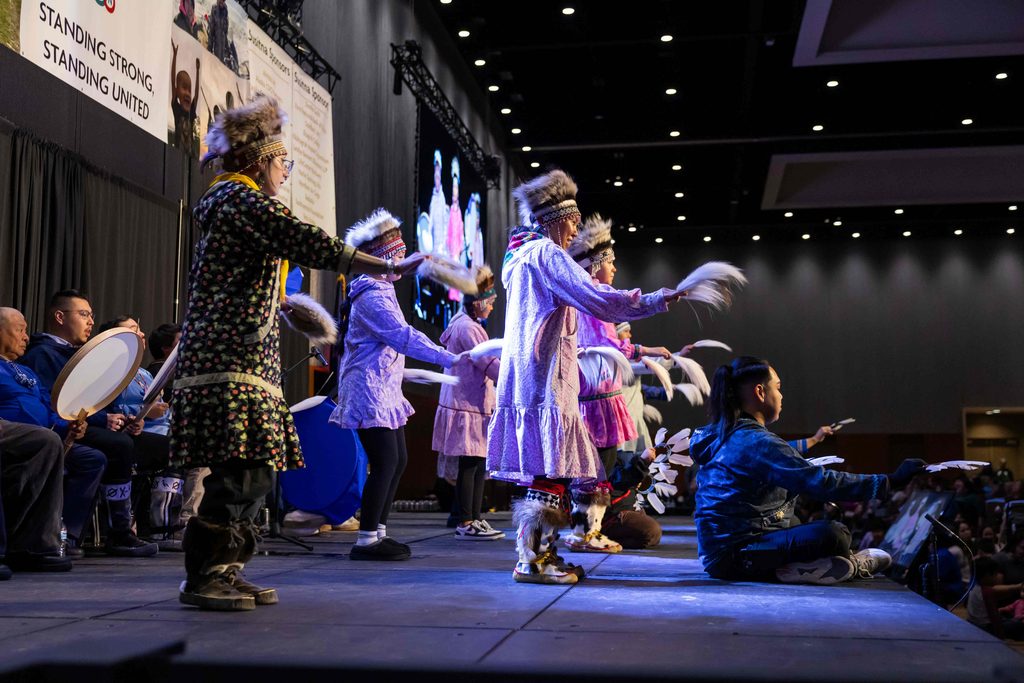
Quyana Alaska is the dance ceremony at the annual Alaska Federation of Natives (AFN) Convention. It’s among the two most popular dance gatherings in the state, along with the biennial Celebration in Juneau. For the 3,000 people lucky enough to score the fifteen-dollar tickets, it’s a highlight of the convention. For dancers, it’s an honor to remember.
“People look forward to it all year,” says Nikki Stoops, vice president of engagement at the Alaska Federation of Natives. Stoops leads AFN convention planning, which includes selecting and scheduling dancers for Quyana. During the two-night dance event, she’s busy coordinating volunteers, working with the media, and helping dance groups navigate the Dena’ina Center.
“When I’m able to stop and watch the dancing,” she says, “it feels like being home. Especially when the Iñupiaq groups are up, since I’m from Kotzebue.”
Quyana – and the AFN convention – can feel like a family reunion, adds Stoops. In the long line that forms on the sidewalk before the doors open to Quyana, people hug, laugh, and visit with cousins and friends they haven’t seen since the last gathering. It’s also a chance for Anchorage residents to experience cultures from around the state, says Stoops.
Even for locals who don’t attend, downtown buzzes with Indigenous energy. Dancers in colorful regalia stack up at crosswalks as they make their way to the Dena’ina Center from all directions, much like they have come to Anchorage from around Alaska.
For those unable to attend, reporters and media techs at the back of the auditorium broadcast Quyana statewide over KTOO public media and the AFN website. Stoops says up to 100,000 people tune in online.
But the scene in Anchorage is only part of the story. For months before Quyana, dancers practice at their schools and community rooms around Alaska. And they fundraise for their travel to Anchorage. Duncan Okitkun of the Kotlik Dancers, whose village of over 600 sits in the Yukon Delta 100 miles south of Nome, says his group raises money through basketball tournaments, raffles, or cookouts.
The funds cover flights, lodging, food, and other expenses, says Okitkun. But traveling to Anchorage from remote Alaska is never guaranteed. In 2024, Okitkun’s group practiced and raised funds for months, but dense fog on their travel day prevented planes from landing at Kotlik. Okitkun says they jumped in a boat and headed upriver to Saint Mary’s, but the fog won out there, too, and the group returned home.
“Weather is always a factor,” says Okitkun. While they missed the 2024 Quyana, AFN kept their invitation open and they made it down the following year. Each year, only fifteen of the over 200 dance groups around Alaska perform at Quyana.
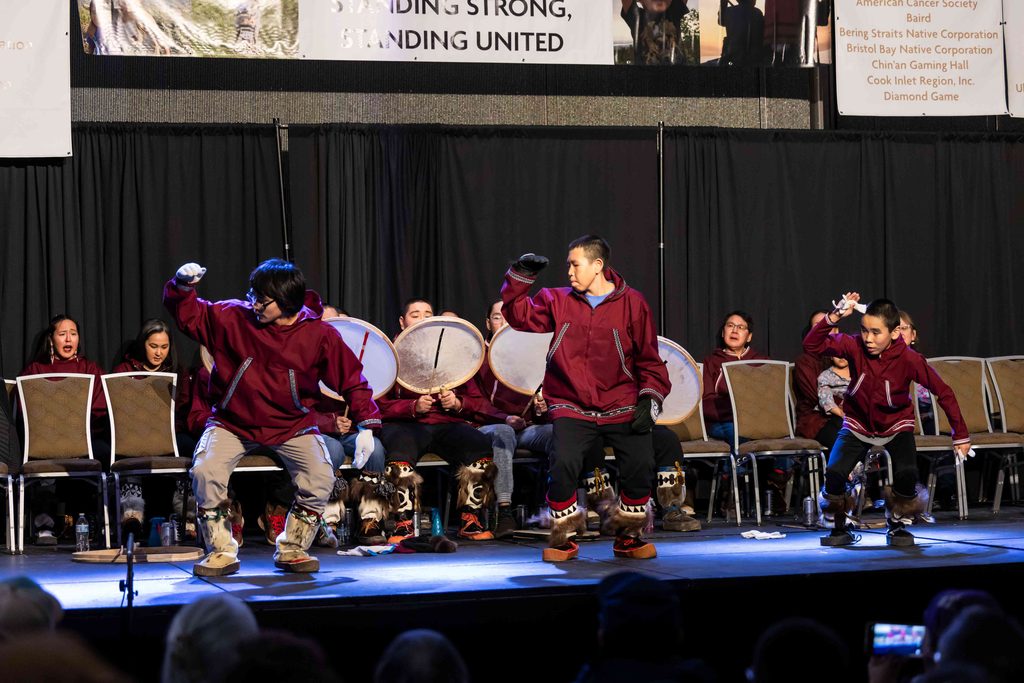
Okitkun, who learned to dance as a toddler and joined the Kotlik Dancers when he was 11 years old, says that dancing brings joy to communities and is steeped in tradition. He explains that in Kotlik, young dancers are inducted into the group with a “first dance” ceremony when they demonstrate they’re ready. For boys, that might mean going on your first hunt and for girls it could be helping to gather berries or clean fish. Once in the group, says Okitkun, dancers make their own regalia and drums and learn the songs and traditions.
“There’s lots of little rules we’ve been told and that we’ve seen,” says Okitkun. “We try to continue that, to follow the rules of the past.”
For instance, performing a song requires permission from the person who wrote it, or from their family or community if the composer has passed on. Dancers don’t move another performer’s mat or step over someone’s drum, which Okitkun calls a sacred instrument. If a drumstick breaks, the drummer must burn it when they get home.
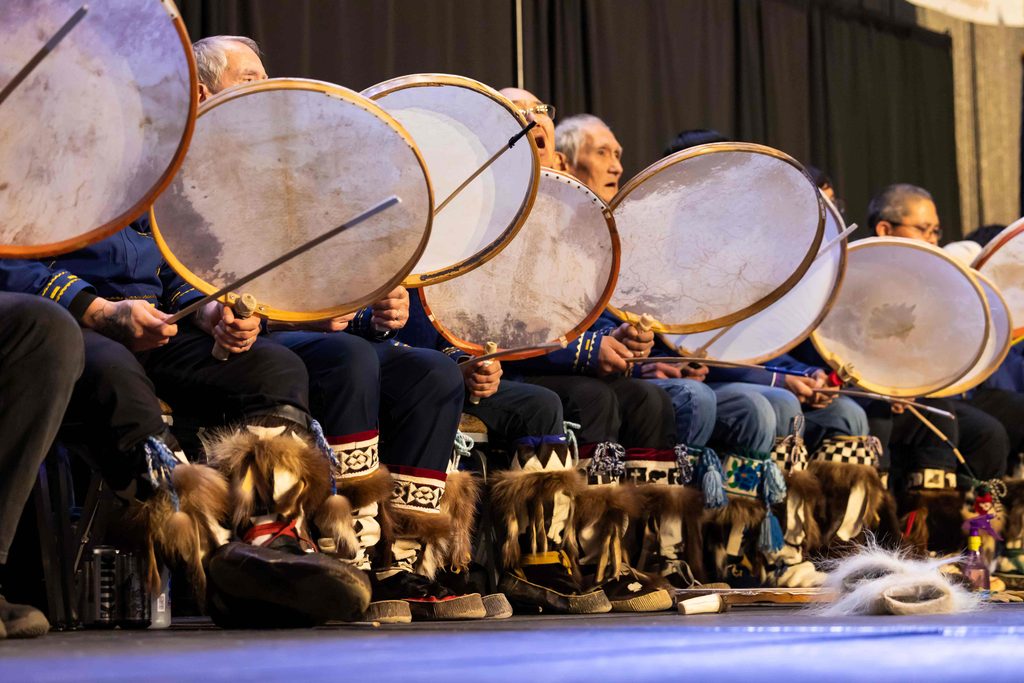
“We know the drummers are the heartbeat,” says Okitkun.
Groups often bring a mix of new and old songs to Quyana, as they do at other gatherings. New songs might be about berry picking, the birth of a child, or the difficulty of declining salmon runs. Or basketball, with mock jump-shots worked into the traditional dance style.
Anthony Boyscout, who leads the Chevak Tanqik dance group in Chevak, home to nearly 1,000 people on the Kuskokwim Delta, says new songs take time to write but are rewarding for the dancers.
“It shows we’re moving along with our culture,” says Boyscout, who began dancing when he was five years old.
The Chevak dancers, who performed at the White House in 2023, are known for high-energy performances. Long-time member Cody Pequeño often riles audiences with his theatrics and big, friendly frame. His humor shows that while heavy on tradition, dancing is not a somber thing.
Gratitude is also baked into Quyana, which is the Yup’ik word for “thank you.” The first Quyana Alaska happened at the 1982 AFN convention to express thanks to Alaskan voters for supporting a ballot on Native subsistence rights.
Incorporating dance into the convention stuck, and now after 40 years it’s recognized as helping restore Native culture over time. Dance group members often range from toddlers to Elders, showing the health of the culture.
“When you see the little kids performing traditional dances,” says Stoops, “it’s the most beautiful thing you’ve ever seen. That’s what it’s all about.”
The annual AFN Convention addresses Native issues and governance. Delegates and partner groups from around Alaska discuss and vote on resolutions that guide AFN priorities in the coming year. This year’s convention is October 22-24, with Quyana on the first two evenings. Here’s this year’s schedule.

Comments are closed.