
Mammoth remains discovered in the Pribilof Islands may belong to what was the last mammoth alive in Alaska.
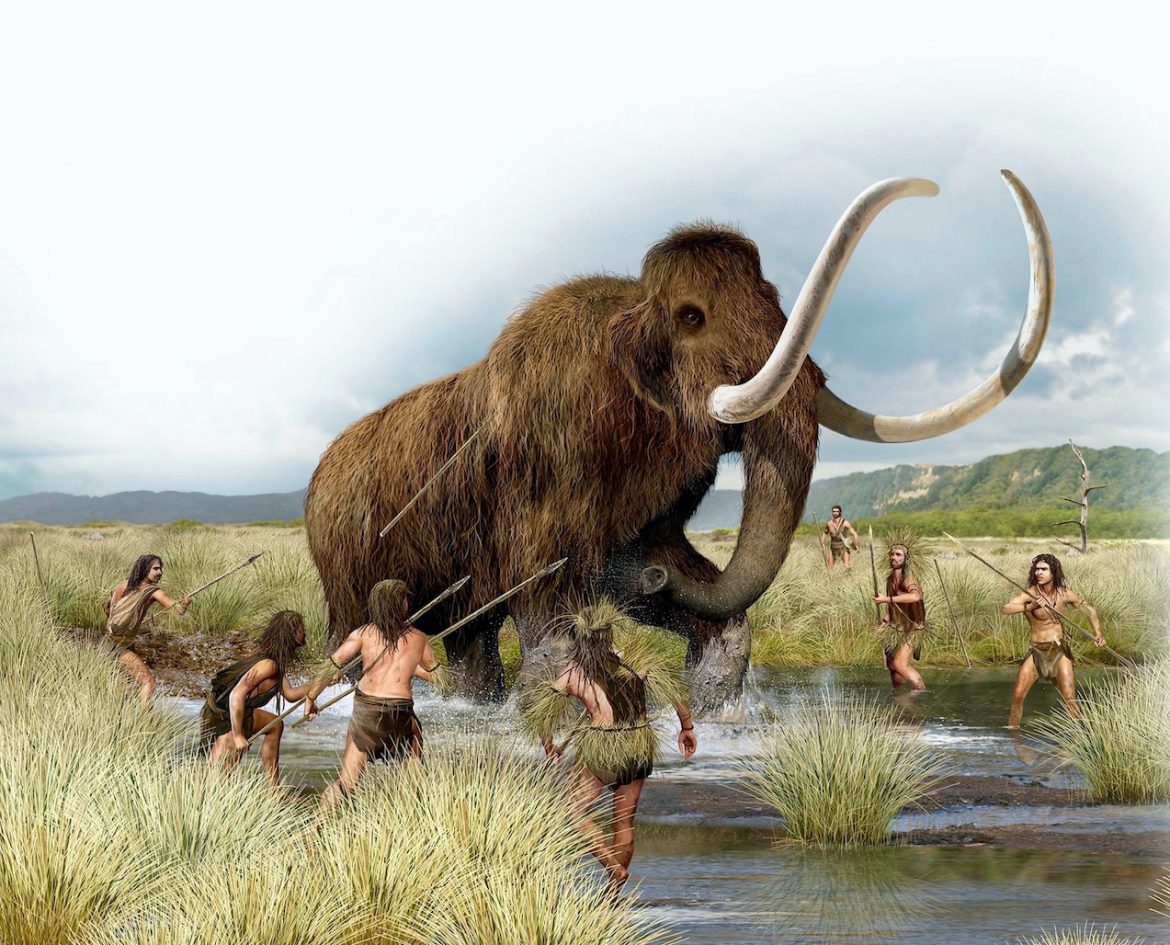
Mammoth remains discovered in the Pribilof Islands may belong to what was the last mammoth alive in Alaska.
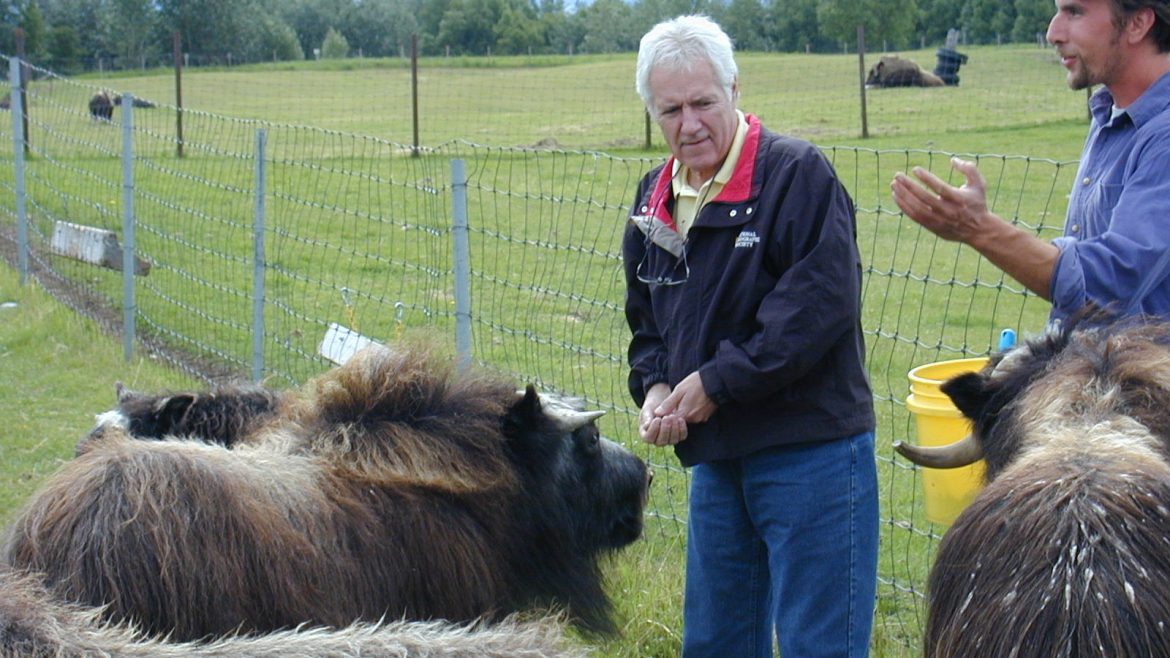
Alex Trebek, the longtime Jeopardy! host who died in November 2020 after a battle with pancreatic cancer, supported the Musk Ox Farm for more than three decades. The Palmer-based farm is a nonprofit dedicated to the domestication of muskox. It harvests qiviut, an ultra-fine wool, from the muskox and runs farm tours. In the late 1980s, the farm’s former executive director contacted Trebek after learning the game show host’s favorite animal was the muskox. A few months later, Trebek called the farm and the relationship was born. Trebek visited on several occasions. His foundation made financial donations to the farm, and for over 30 years he personally signed every adoption certificate for the nonprofit’s Friends of the Musk Ox program. His involvement was so consistent the staff referred to him as the “herd godfather.” The nonprofit’s current executive director, Mark Austin, says multiple celebrities have visited the farm over his…
Filmmaker Pete Bell’s documentary about the residents of McCarthy, Alaska.
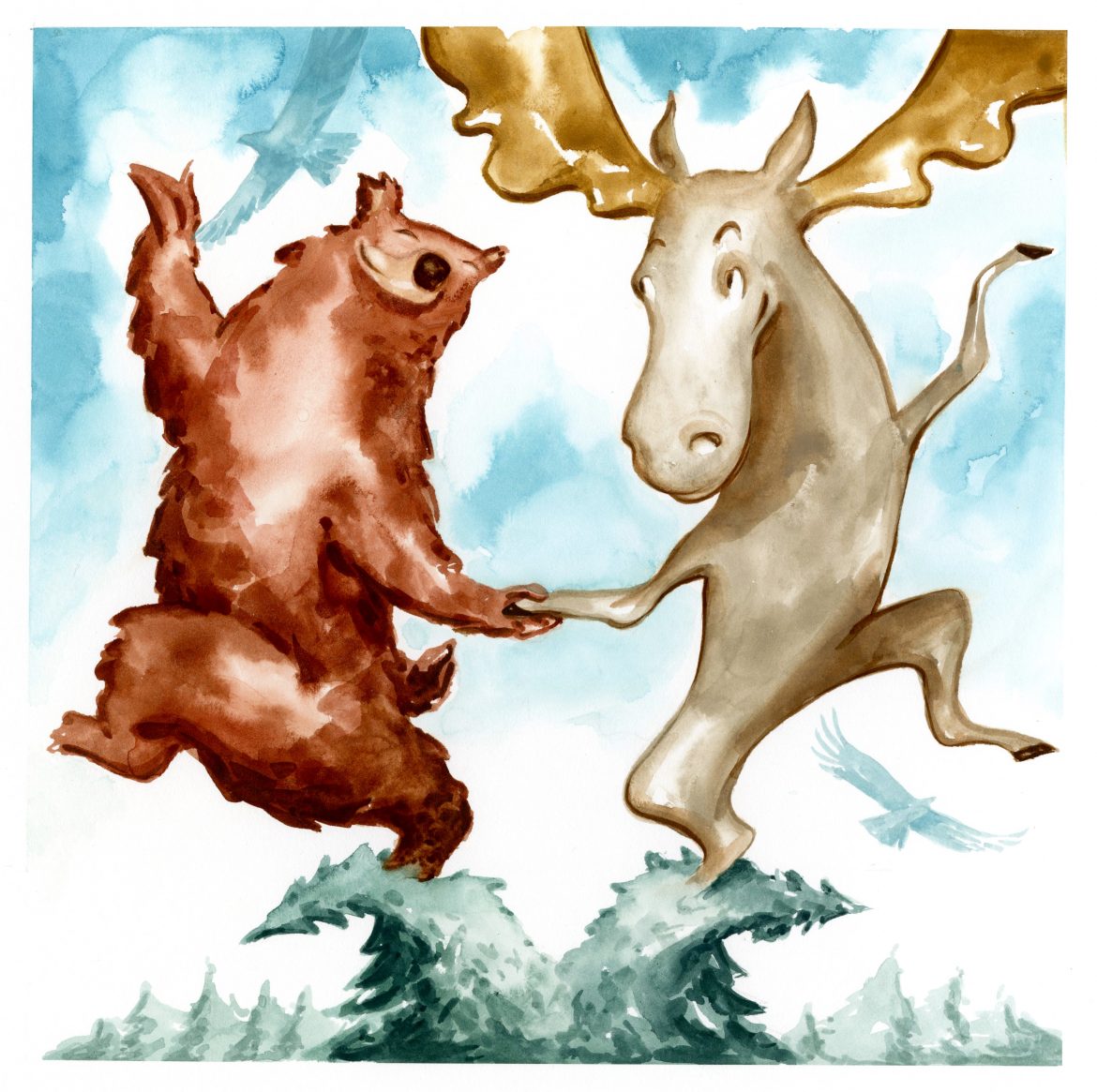
Art by Tim Bower Why do moose have that weird goatee thing? The unofficial answer is… well… because… nature’s weird? The flap of skin that hangs underneath a moose’s chin is known as a dewlap, or bell. Scientists have theories about the purpose of the dewlap, including that it may be used for communication during the rut. Another theory is that it may act as a sign of social hierarchy; a larger dewlap could signal a more dominant male. Ultimately, there’s no conclusive evidence explaining exactly why moose have dewlaps. That means the official answer is, well, because nature’s weird. Nature is, in my opinion, pretty neat. What’s the neatest thing about nature in Alaska? During winter, wood frogs in Alaska will stop breathing, their hearts will stop beating for days to weeks, and two-thirds of their body will freeze before they thaw and return to life as usual in…
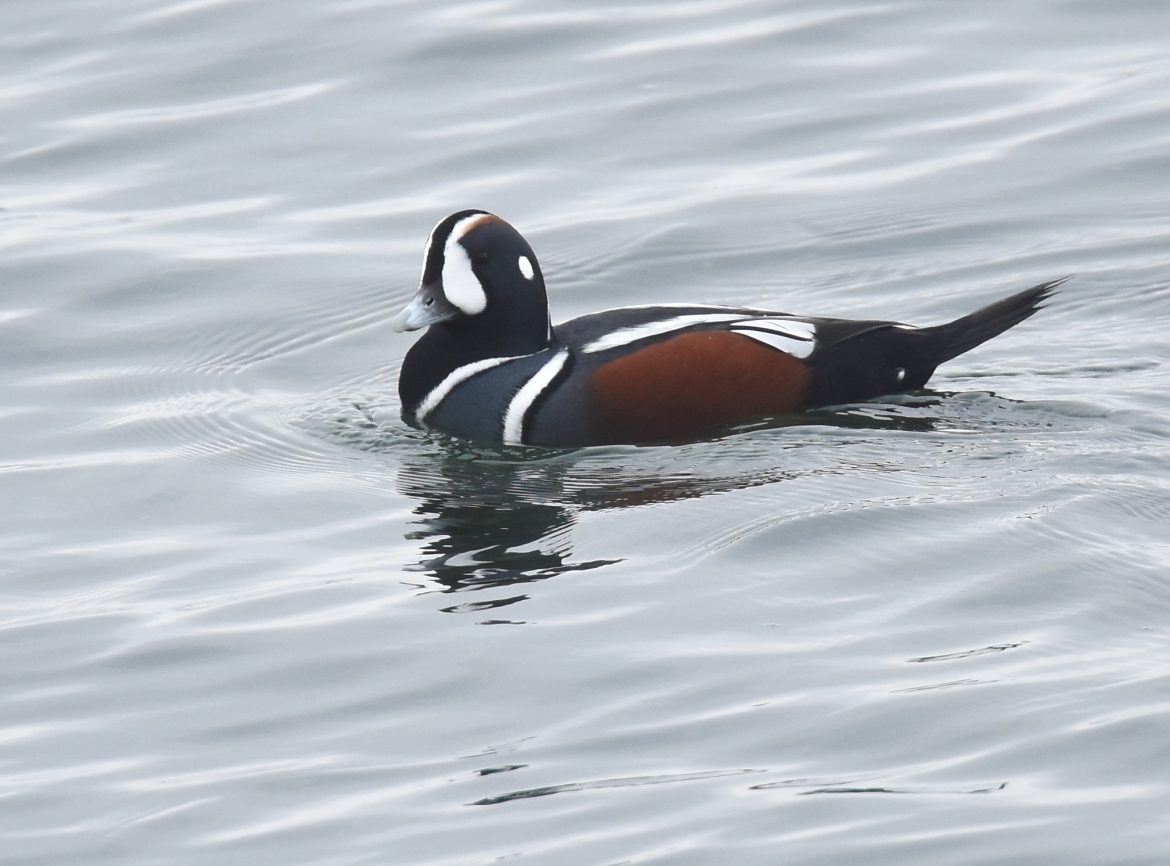
A Harlequin duck. Photo courtesy Andy Reago & Chrissy McClarren, Wikimedia Commons Red-faced cormorant Nesting on cliffs or steep slopes above cold ocean water, this bird can be spotted along the Aleutian Islands and around the Kenai Peninsula. Alaska is the only place this cormorant lives in the United States. Willow ptarmigan The Alaska state bird masterfully camouflages itself by turning white in winter and mixed browns and reds in summer. Identify this largest of the state’s ptarmigan by its wide bill or feathered feet. Harlequin duck Named because the blue-gray feathers with striking black, white, and rufous markings look like medieval court jesters, or harlequins.
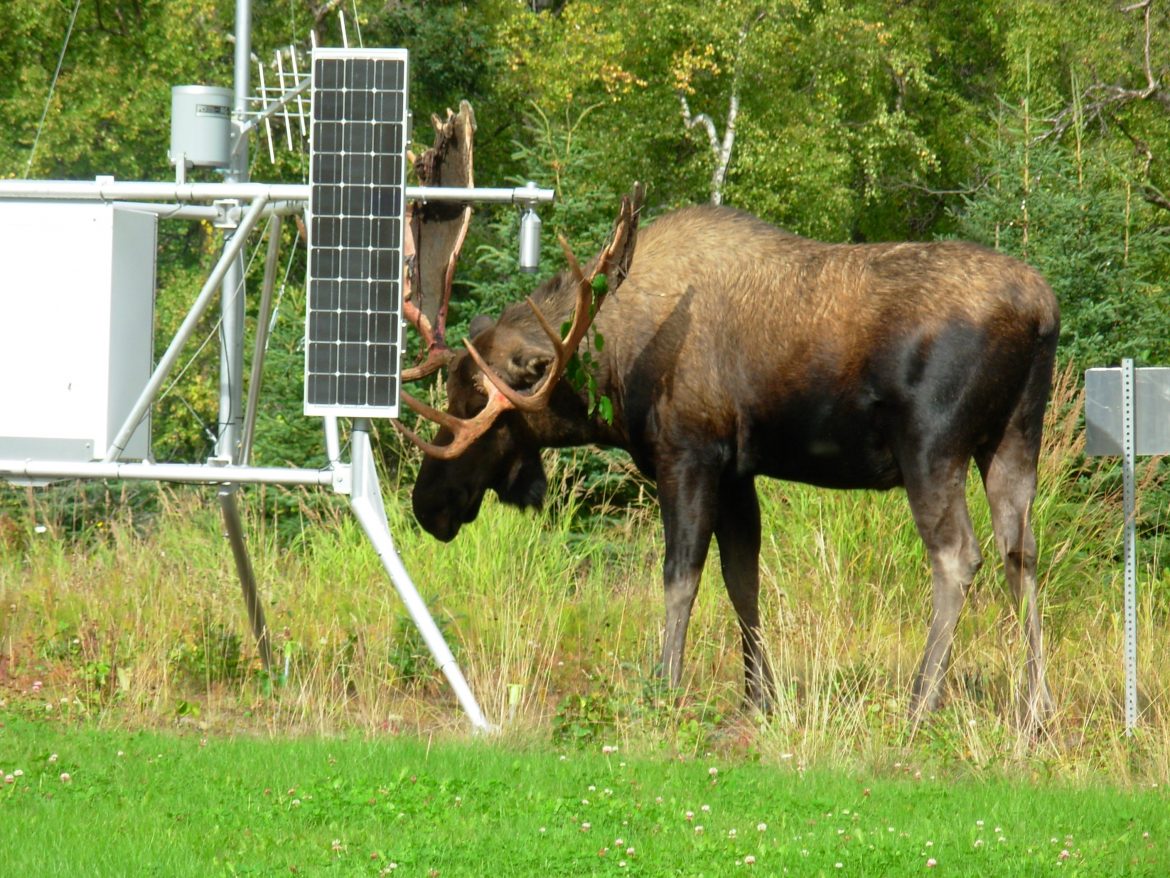
A bull moose rubs his antlers on weather instruments in Anchorage. Photo courtesy Dan Peterson, NOAA/NWS/WSFO Anchorage It’s uncommon to see wolverines in Anchorage, but one rogue wolverine ventured into the city where it could prey on chickens and chase stray cats. Biologist Dave Battle got a call one day that the wolverine had killed someone’s rabbits and stashed them under a low deck. Every time the homeowner approached the deck, the wolverine growled. To solve the dilemma, Battle first used a garden tool to pull the rabbits out from under the deck. Then, he and a fellow biologist turned on the hose and jetted water at the animal. The wolverine sprinted out from under the deck and never returned. “Not every day that you spray a wolverine out from under a deck with a garden hose,” Battle says. Battle, who has worked as the management biologist for the Anchorage…
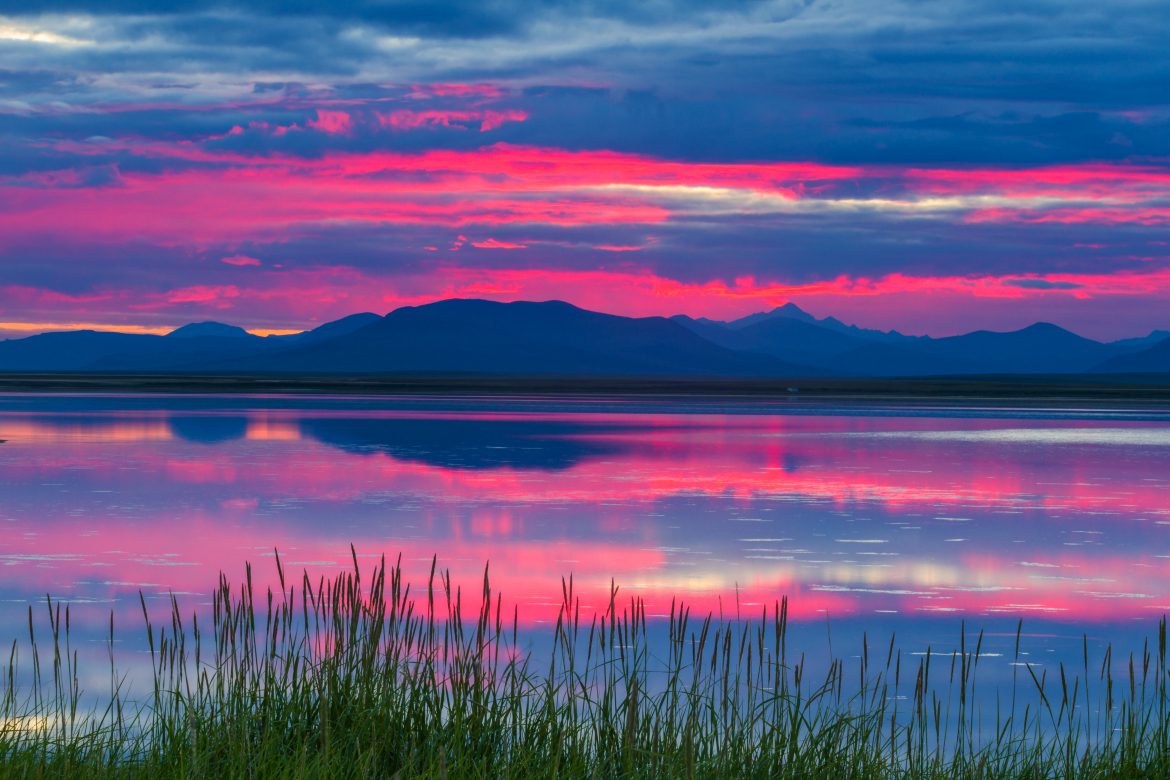
Road trips along the Seward Highway, outside of Nome, and along the Alaska Highway rank among the favorites.
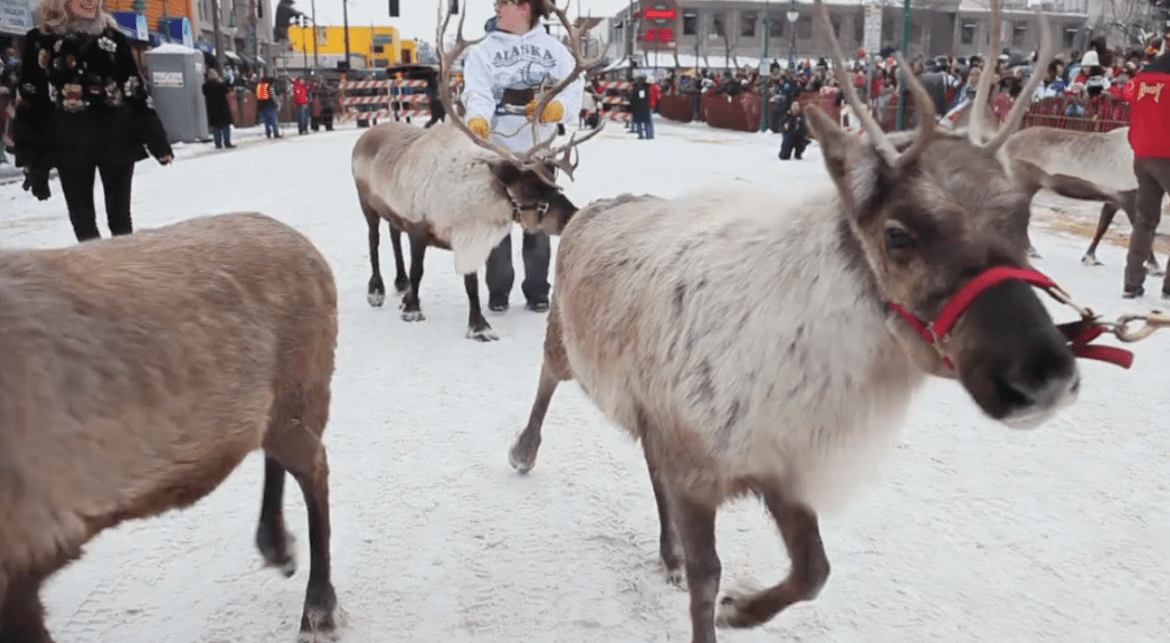
Running of the Reindeer – Fur Rondy from Alaska.org on Vimeo.
Anchorage By Winter from Zan Butler on Vimeo.