
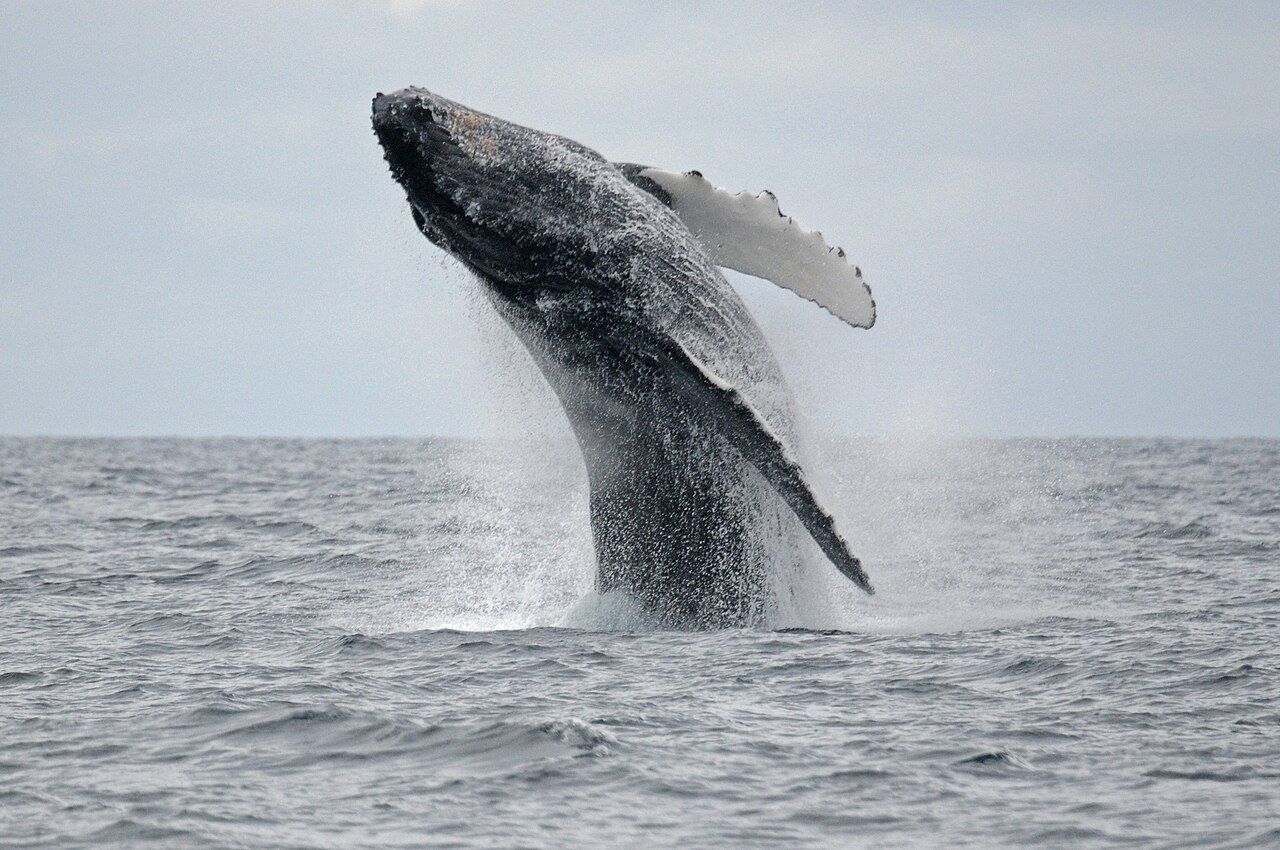
What do humpback whales do with the energy they gain from feeding in Alaska’s rich waters all summer? Turns out they use some of it to belt out epically long songs in their breeding grounds in Hawai’i. Some songs, researchers recently found, exceed a whopping 16 hours in length.
To put that in human terms, the longest song ever recorded of the Grateful Dead, famous for their lengthy jams, lasted a mere 48 minutes. And while Richard Wagner’s Ring Cycle, among the longest known human songs, stretches out across 15 hours, it’s typically performed over several weeks.
But humpback whales skip the breaks, says marine scientist Julia Zeh, who led the recent research. Even when they come to the surface, which Zeh says they do every 15 to 20 minutes, the whales “sing continuously around a few quick breaths.”

Zeh says it’s especially impressive considering that whales sing while holding their breath, swimming, and making deep dives, which all require physical exertion and managing their air supply.
“On top of that,” Zeh tells Alaska magazine, “humpback whales are fasting when they’re in Hawai’i. So they’re doing everything on energy reserves from their summers,” which Zeh says many spend in Alaska.
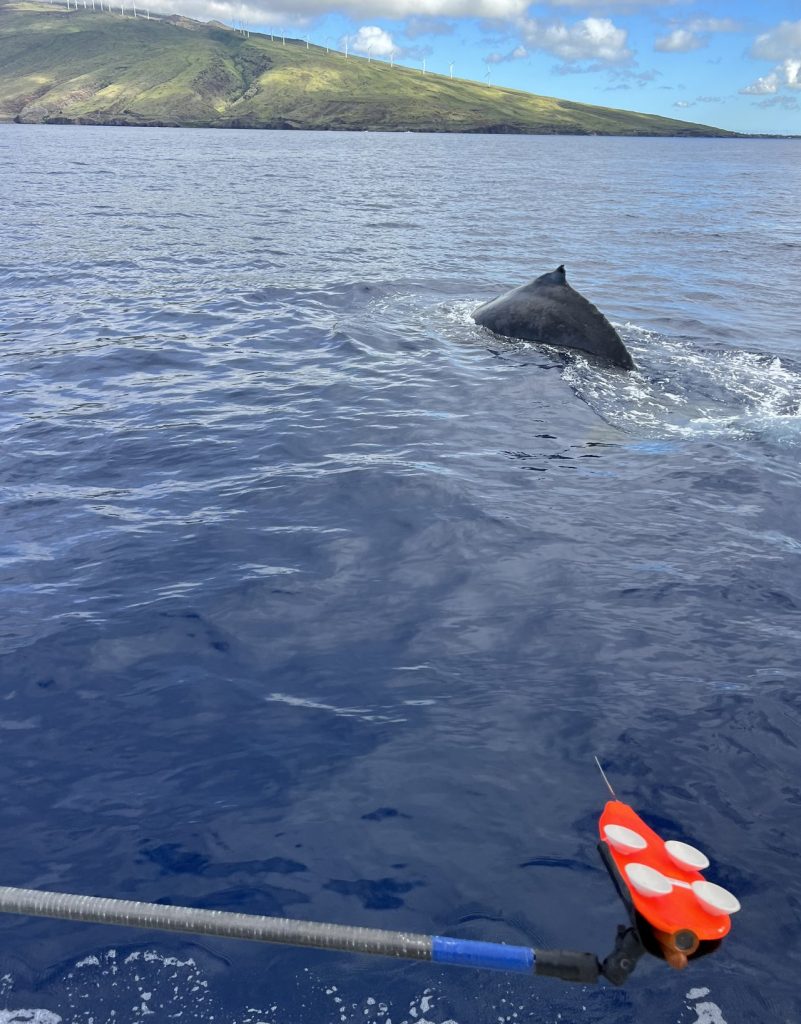
Zeh and her team tuned into the singing using data loggers suction-cupped onto whales. They attached them by reaching out with a long pole as they bounced alongside the giants in a boat. Some were attached by drone. In all, researchers tagged 16 whales. All were males, who do most of the humpback singing.
The loggers, which are about the size of a serving platter, simultaneously recorded each whale’s movements and their singing. When the suction wore off, they floated to the surface to be collected by researchers. Although scientists and mariners have listened to whale songs for decades, the loggers provided the first recordings of entire song cycles, along with data on what the whales were doing as they sang.
At the Syracuse University lab where Zeh completed her doctorate work, she analyzed the songs, including their short phrasings and larger themes. She then matched their timing with a whale’s activity, including its downward dives, time spent near the ocean floor, and ascents to the surface for air.
Zeh discovered that unique parts of songs consistently align with certain stages of a whale’s dive. She also found that whales use the greatest range of sounds while in the deepest waters, where they are more stationary than during dives and ascents. Researchers believe this is where males can really pour out their acoustic effort to show off their fitness to females, who can hear the songs from miles away.
The research may someday help protect whales from ship strikes, a known cause of humpback injury and death. If mariners listening to whale songs can determine through their phrasings whether an individual is headed toward the surface, they might be able to avert collisions.

The data, collected over six years, also help establish a baseline of singing activity, which in the future could be used to determine when human noise disturbs whales. Underwater noise from boats, oil and gas exploration, and other machinery is known to alter the behavior of marine mammals and is a rich area of research today.
Zeh told Phys.org that similar research in other regions could determine if the same song patterns occur outside of Hawai’i. Her findings were published in the journal Current Biology.
“It is incredible to get to work with these whales at such close proximity,” says Zeh, adding that learning about their songs provided her an “inside look” at their underwater behavior.
“Even though I’ve been studying them for years, their size and abilities are still unbelievable,” she says.

Comments are closed.